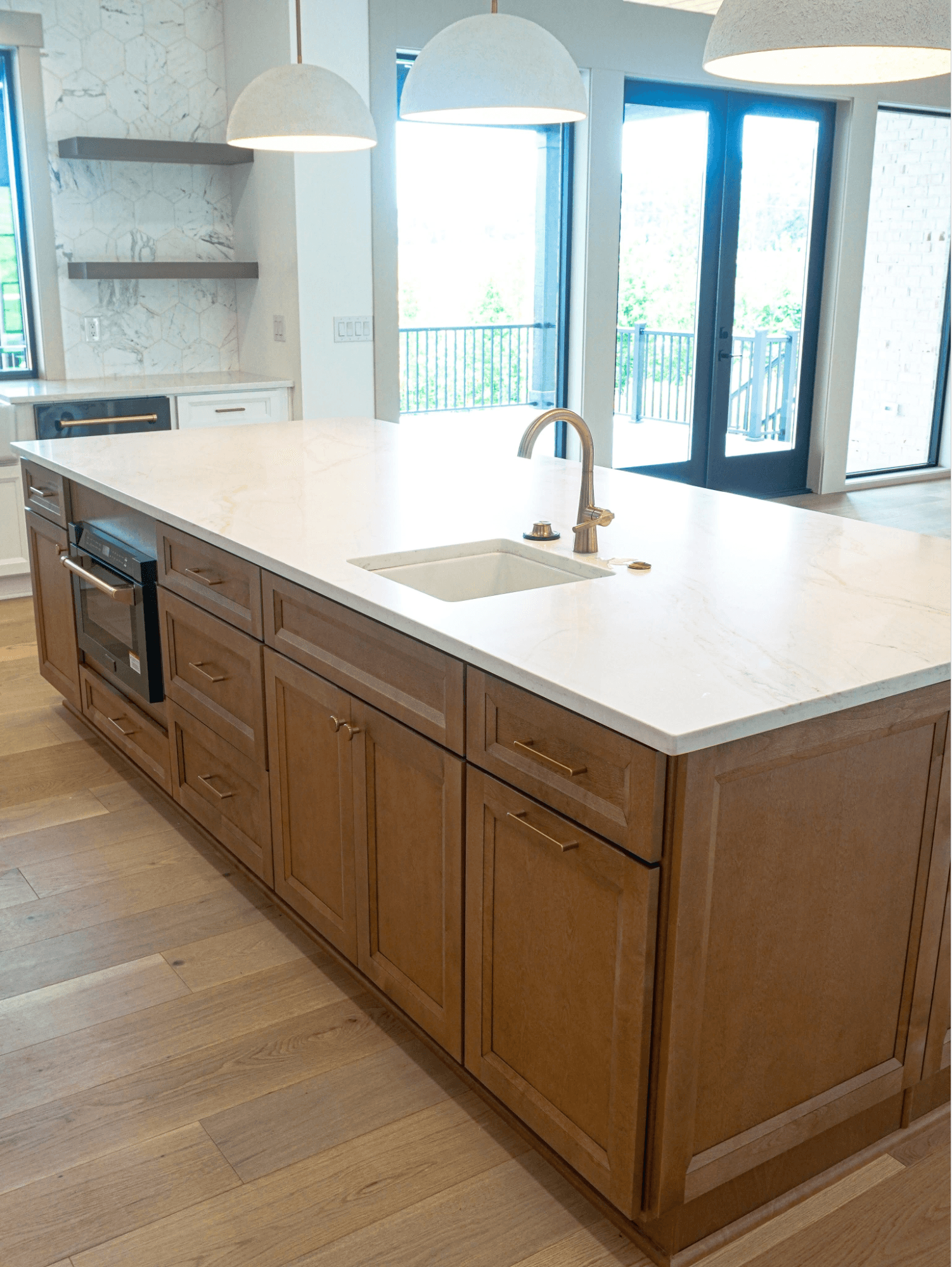
White countertops create a clean and flexible backdrop, so the sink can either blend in quietly or add contrast. The right choice depends on cabinets, faucet finish, hardware, appliances, lighting, and the overall mood of the room.
A kitchen sink is not just a practical fixture. It also affects balance, contrast, and style. A bright sink can look seamless, while a darker or metallic finish can give the room more definition.
This guide explains common sink finishes, when to match or contrast, and how to choose an option that supports the full kitchen design. East Coast Granite of Richmond can help homeowners compare surfaces, fixtures, and layout choices for a more cohesive result.
Best Sink Colors for Light Counters
White Sinks
A white sink creates a soft and seamless appearance. This option works well when homeowners want the counter and sink area to feel calm, bright, and simple.
Black Sinks
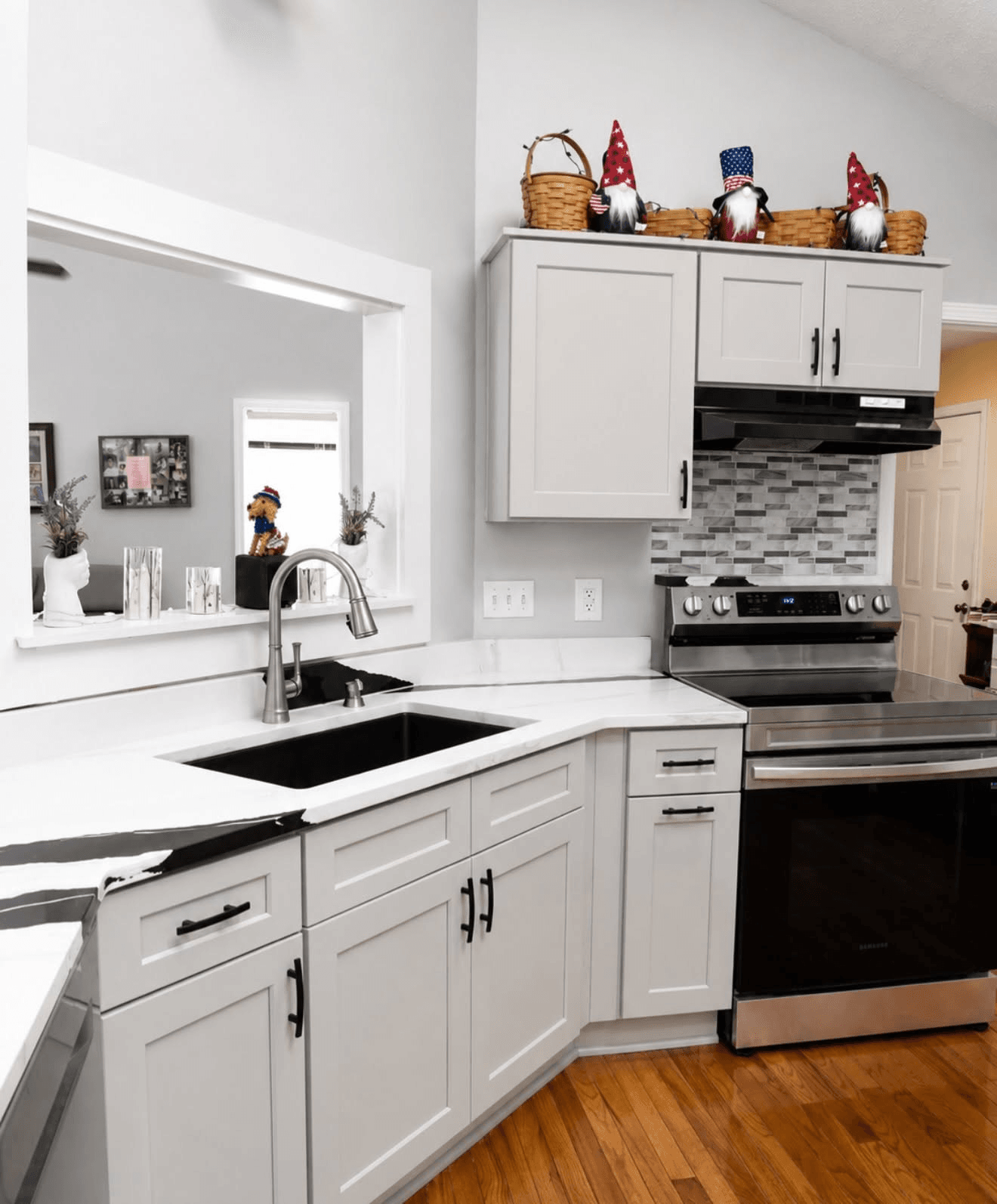
A black sink creates strong contrast. It can look bold in a white kitchen, especially when paired with black hardware, dark lighting fixtures, or other accents in the room.
Stainless Steel Sinks
Stainless steel is one of the most flexible choices. It works with many cabinet colors, appliance finishes, faucet styles, and countertop colors.
Warm Metallic Finishes
Some sinks include brass, copper, bronze, or warm-toned finishes. These options can add warmth and personality, but they should coordinate with the faucet and hardware.
Soft Neutral Sinks
Gray, taupe, cream, and composite neutral sinks can create a balanced middle ground. They add definition without the stronger contrast of black.
Should the Sink Match or Contrast?
A matching sink can make the counter area feel clean and uninterrupted. This approach works well for minimalist rooms, soft traditional spaces, and kitchens where the cabinets or backsplash already provide enough interest.
A contrasting sink makes the fixture more visible. Black, stainless, or warm metal can help define the sink zone and prevent a light surface from feeling too flat.
The faucet, cabinet pulls, lighting, and appliances can guide the choice. A sink does not need to match every finish exactly, but it should feel connected to at least one other major element.
Some finishes show water spots, scratches, or residue more easily than others. Homeowners should choose a surface that matches their cleaning habits, not only the style they like in photos.
Sink Colors by Kitchen Style
Modern Kitchens
Modern spaces often work well with stainless steel, black, or crisp white sinks. Simple shapes and clean lines help the fixture feel intentional.
Farmhouse Kitchens
Farmhouse spaces often use apron-front sinks in white, fireclay, or soft neutral finishes. These choices can feel classic and welcoming.
Traditional Kitchens
Traditional rooms can support white, cream, stainless, or warm metallic sinks. The best option should match the cabinet style and hardware finish.
Transitional Kitchens
Transitional spaces allow more flexibility. Stainless steel, white, black, and muted composite finishes can all work depending on the cabinets and stone countertops.
Natural and Luxury Kitchens
When the room includes premium stone materials, the sink should support the surface rather than compete with it. A simple finish often works best when the counter has visible movement.
How to Choose the Right Sink Color
Cabinets take up more visual space than the sink, so they should guide the final decision. Dark cabinets may benefit from a lighter sink, while light cabinets can support more contrast.
Hardware and faucet finishes can make the sink feel connected. Stainless, brushed nickel, matte black, brass, and bronze all create different effects.
If the counter has strong veining, a simple sink may be best. If the counter is quiet and solid, a more defined finish can add interest.
A sink should be attractive, but it also needs to handle dishes, water, cleaning, and regular kitchen activity. Durability and ease of care matter as much as color.
Photos can be misleading. The best choice comes from viewing sink samples, counter samples, cabinet doors, and hardware in the same lighting.
Material and Installation Details
Undermount Sinks
Undermount installation creates a clean line and makes wiping crumbs or water into the basin easier. It is a common choice when the goal is a smooth counter area.
Apron-Front Sinks
An apron-front style can become a design feature on its own. It works especially well when the room has a farmhouse, cottage, or traditional feel.
Composite Sinks
Composite options can offer muted tones that feel softer than stainless or black. They are useful when homeowners want color without a high-contrast look.
Metal Sinks
Metal finishes can connect with appliances and fixtures. Stainless is practical and familiar, while warmer metals can feel more decorative and custom.
East Coast Granite of Richmond can help homeowners compare sink colors, countertop materials, and layout details. With the right planning, the sink can support the design instead of feeling like an afterthought.